Why Explosive Leg Training Is Trending in Badminton
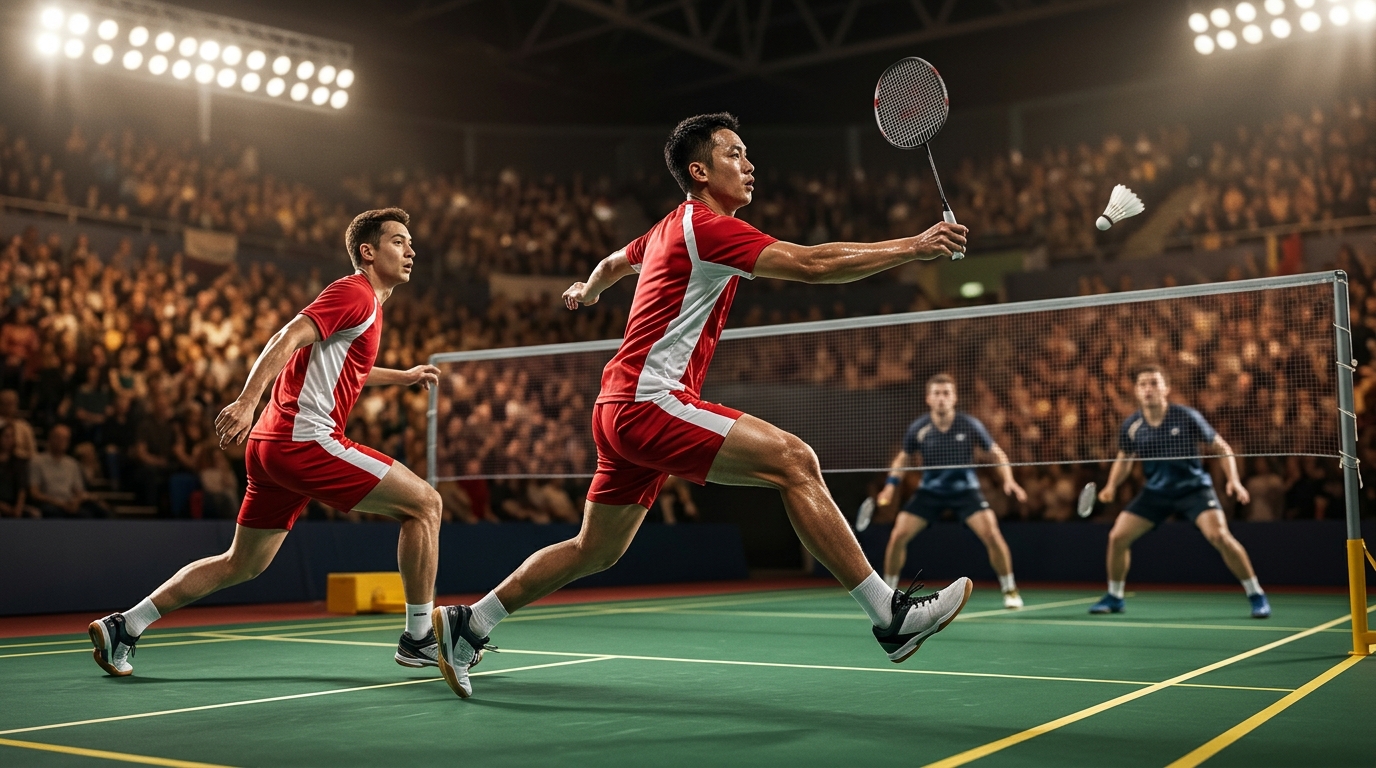
Whenever a young Indonesian shuttler surges, highlight clips take over feeds: deep lunges that scoop the shuttle off the floor, split steps fired before every return, and jumps that make an overhead swing look like artillery. The recent buzz around Alwi Farhan — the young men's singles player whose stubborn court coverage has earned him the "Badak" (rhino) nickname — is a perfect example. The trending headline is about him, but the real story underneath is about legs: what they actually do in badminton, why they matter so much, and how an ordinary player can train the same qualities at a realistic scale.
That is worth unpacking, because explosive leg training is one of the most misunderstood corners of amateur fitness. It is not about huge quads or gym heroics. It is about teaching your body to produce force quickly, absorb it safely, and repeat the cycle for the length of a match. Those are trainable skills, and they respond to surprisingly simple work.
Why Badminton Lives and Dies by the Legs
Badminton rallies are built from dozens of short, violent accelerations: a two-step push to the back corner, a deep lunge at the net, a scissor kick behind the smash, then a scramble back to base. All of it is powered by the lower body — and at the same moment, the legs also work as brakes. The faster you move, the more force they must absorb on every landing.
The split-step and lunge engine
The split step is the small hop that primes your body right before an opponent hits the shuttle. Done well, it turns reaction into motion instead of a pause. From there, most court coverage becomes single-leg work: one leg reaches, decelerates, and pushes you back toward the center. A strong front leg in a lunge does not just protect the knee — it is the difference between saving a drop shot and watching it land.
The ground-up smash chain
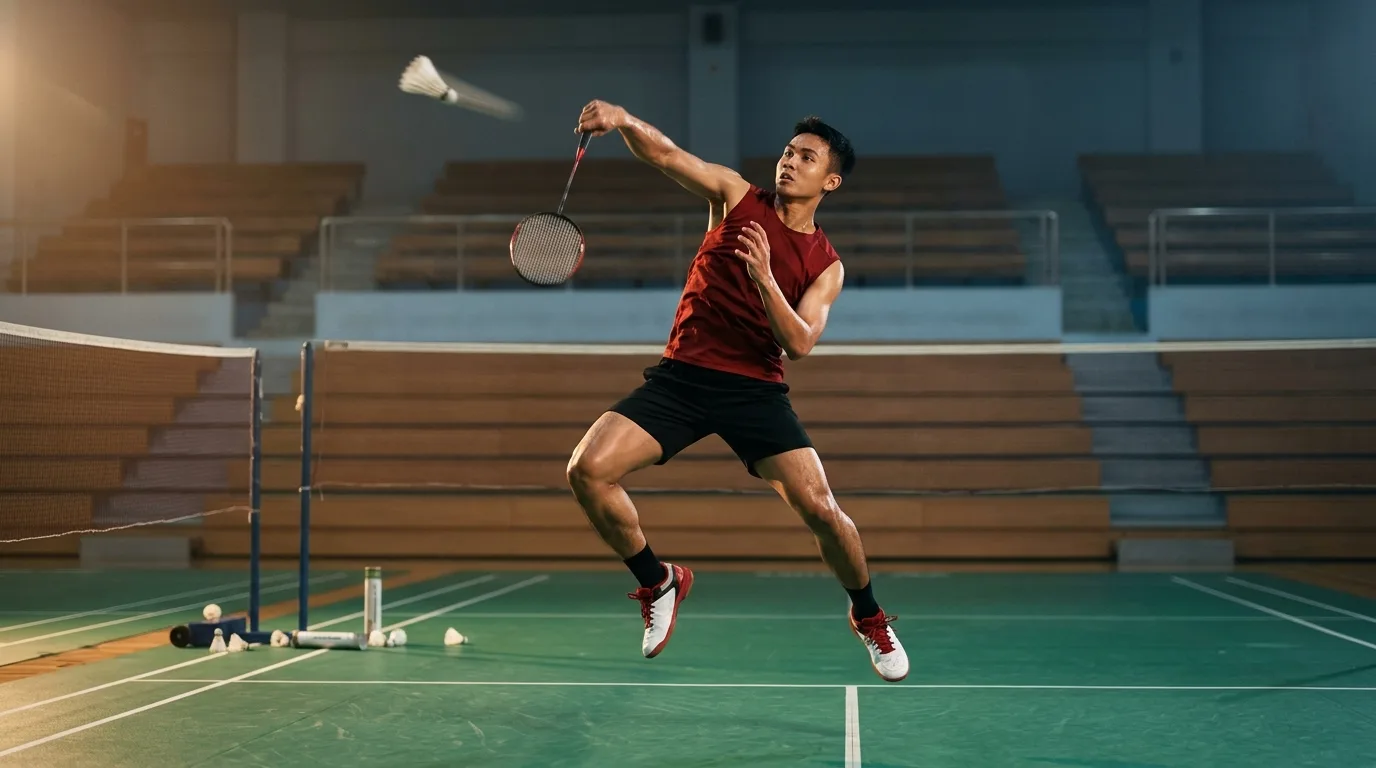
A smash is not born in the shoulder. In a healthy jump smash, force travels from the floor through the legs, hips, and core before the arm gets involved. Weak legs leak power at the first link of the chain, which is why players who only drill their swings often plateau. Jump quality, hip drive, and landing control all live in the lower body.
What "Explosive" Really Means
The word explosive gets thrown around loosely. In training terms, three qualities overlap, and badminton needs all three:
Strength — raw force your muscles can produce, built with squats, split squats, hip hinges, and calf work.
Power — force expressed with speed, built with jumps, bounds, and fast push-offs. This is what turns a lunge into a snap and a smash into a threat.
Endurance — the ability to repeat those efforts with short recoveries, built through footwork drills and interval-style conditioning.
The order matters. Power stacked on top of a strength base is safer and more effective than leaping straight into plyometrics, because tendons and landing mechanics need time to adapt. A simple rule of thumb: earn the right to jump by first controlling slow, deliberate strength work.
An Explosive Leg Workout You Can Start This Week
Foundation block (two sessions per week)
Bodyweight or goblet squat: 3 sets of 8–10 reps
Split squat or Bulgarian split squat: 3 sets of 8 per side
Lateral lunge: 3 sets of 6–8 per side (badminton is a sideways sport)
Romanian deadlift or hip hinge: 3 sets of 8
Calf raise: 3 sets of 12–15
Keep the tempo controlled and end each set challenged but not wrecked. For most beginners this phase runs about four to six weeks.
Power block (once the base feels solid)
Jump squat: 3 sets of 5 — chase height and soft landings, not fatigue
Skater jumps or lateral bounds: 3 sets of 5 per side
Broad jump or low box jump: 3 sets of 3–5
Single-leg hop progressions: only once landing mechanics feel automatic
Rest fully between power sets, usually one to two minutes, because the goal is quality, not sweat volume. Keep total jump volume modest at first; tendons adapt more slowly than muscles.
Court-specific add-ons
Shadow footwork: 3 rounds of 30 seconds at game intensity
Lunge-and-recover patterns to the four corners
Interval skipping for rhythm and calf resilience
Recovery and progression
Move one variable at a time: more reps first, then more load, then more complexity. Sleep and protein handle the boring half of the work, and at least one full rest day between heavy leg sessions keeps progress on track. Mistakes to avoid: skipping the warm-up, stacking too much jumping too early, ignoring single-leg work, and training legs hard the day before a match.
If consistency is the bottleneck, structure beats willpower. Many MoGerak users turn their routine into a game — logging steps, runs, or rides to earn coins, joining step challenges with friends, and trading effort for vouchers — which keeps the aerobic base building on days when the gym feels optional. A gamified streak is not a substitute for the plan above, but it is a surprisingly effective reason to show up.
FAQ
How often should I train my legs for badminton?
Two focused sessions per week is a practical sweet spot for most recreational players: one strength-focused, one power- or footwork-focused. Leave roughly 48 hours between heavy leg days, and keep intense jumping away from match days so fresh legs are available when it counts.
Can beginners do jump training safely?
Yes, in stages. Start by owning the landing: small hops with quiet, bent-knee landings, plus controlled holds in the lunge position for a few weeks before continuous jumping. Low-impact options such as skipping and broad jumps onto a forgiving surface are friendlier starting points than max-effort box jumps.
Final Takeaway
The trending clips are inspiring, but the trainable truth behind them is simple: badminton legs are built from strength first, speed second, and repetition always. You do not need an elite program to feel the difference — consistent, patient work on the fundamentals is enough.
Build a strength base with squats, split squats, and hinges before chasing jumps.
Add small doses of high-quality jumping once landings feel controlled.
Train sideways: lateral lunges and bounds mirror the sport better than straight-line work alone.
Protect recovery with rest days, sleep, and honest pacing.
Start this week with the foundation block, and let the explosive stuff grow out of it.